8 locations across Western and Central Washington: terrain, wind, airspace, and what makes each one worth the drive.
Washington State is one of the best places in the country to fly a paramotor. The sheer variety of terrain (coastal beaches, river valley flatlands, high desert plateau, mountain valleys, and island shorelines) gives pilots a range of flying environments that most states can't match within a single day's drive.
Below are 8 of our recommended flying locations. These are places our instructors know well: terrain we've assessed, airspace we've mapped, and conditions we've flown in across seasons. This list is written for certified pilots. If you're not yet certified, start with our PPG Pilot Training course before visiting any of these sites independently.
Disclaimer: Airspace, TFRs, and landowner permissions change. Always verify current airspace status using the FAA's SkyVector, ForeFlight, or B4UFLY before any flight. Always obtain landowner permission before landing on private land. Conditions at these locations vary significantly by season and time of day.
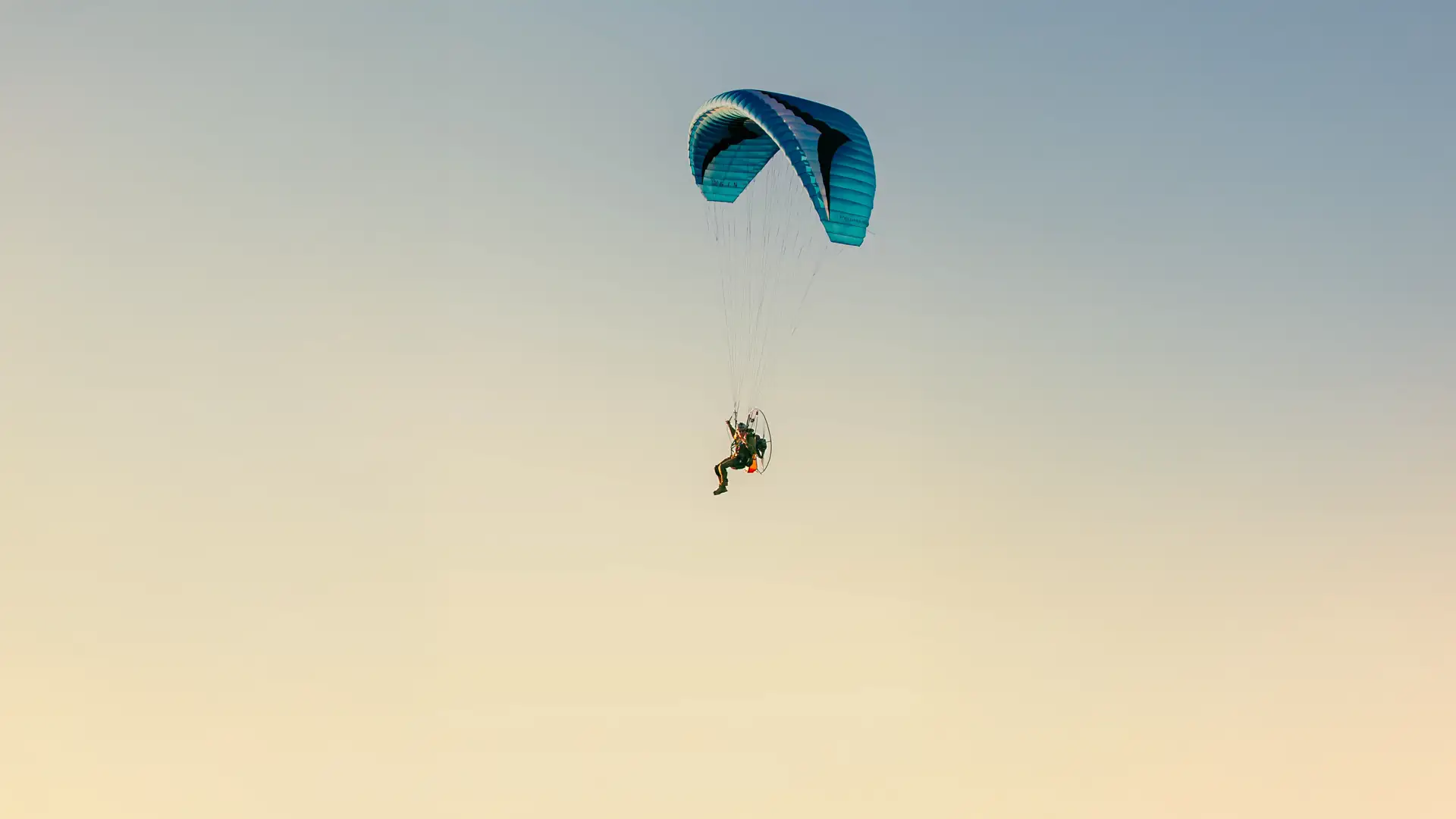
Northwest Washington · near Burlington / Mount Vernon
The Skagit Valley is widely regarded as one of the best paramotor flying areas in the Pacific Northwest. The broad, flat agricultural valley floor (framed by the North Cascades to the east and the Puget Sound lowlands to the west) offers unobstructed terrain for miles. Morning conditions here are exceptional from late spring through early fall: calm marine air, minimal thermal activity until late morning, and some of the most dramatic scenery in the state. The valley sits below the Class B airspace surrounding Seattle-Tacoma International, and north of the controlled zones around Paine Field. With careful airspace planning using the FAA's SkyVector or ForeFlight, most of the valley floor is fully accessible to Part 103 ultralight pilots. The tulip fields in spring (April) create one of the most photographed flying backdrops in Washington.
Pilot Notes
Washington Coast · near Ocean Shores / Grays Harbor County
The Washington Coast south of the Olympic Peninsula offers some of the most open flying terrain in the state. Ocean Shores sits on a peninsula with beach access on three sides: wide, hard-packed sand beaches that serve as natural runways, consistent onshore winds from the Pacific, and essentially zero obstructions. This is one of our primary training locations for good reason: the flat beach terrain is forgiving for students, the airspace is uncontrolled and largely free of traffic, and the visual reference of the ocean makes navigation simple. Experienced pilots come here specifically for the coastal flying experience. Beach runs at low altitude along the surf line, approaches over the dunes, and the thermal activity that builds off the sand on warm afternoons. It's a different kind of flying from the inland valley sites, and a genuine bucket-list location for Pacific Northwest pilots.
Pilot Notes
Central Washington · near Ellensburg / Kittitas County
Cross the Cascades on I-90 and you enter a completely different flying environment. The Kittitas Valley around Ellensburg sits at roughly 1,500 feet elevation, receives dramatically less precipitation than Western Washington, and features the kind of wide-open terrain (sagebrush flats, agricultural land, and rolling hills) that Eastern Washington is known for. The flying conditions here are powerful. Ellensburg is consistently ranked among the windiest cities in the US, and for paramotor pilots that wind is a double-edged consideration: it extends your flyable season into winter, but it also demands more skill than the calm marine-influenced mornings of Western Washington. Early morning is critical. Kittitas Valley can be glassy calm at sunrise and actively challenging by 9am. Summer afternoons are for experienced pilots only. For advanced students or certified pilots looking to build crosswind and thermalling experience, this is one of the best training grounds in the state.
Pilot Notes
Puget Sound Islands · near Oak Harbor / Coupeville
Whidbey Island is the largest island in Puget Sound and one of the most scenically striking flying locations in Washington State: dramatic shorelines, old-growth forest corridors, pastoral farmland, and views of the Olympic Mountains across the water. The catch: Whidbey is home to Naval Air Station Whidbey Island, one of the busiest military air installations on the West Coast. The restricted airspace around the NAS and its associated MOAs and MTRs requires more careful pre-flight airspace planning than anywhere else on this list. That said, the southern half of the island around Coupeville, Greenbank, and the South Whidbey area contains accessible uncontrolled airspace that experienced pilots regularly fly without issue. If you're comfortable with airspace planning and use ForeFlight or SkyVector to verify your route, Whidbey rewards you with flying that simply doesn't exist at inland valley sites.
Pilot Notes
North-Central Washington · near Twisp / Winthrop
The Methow Valley in Okanogan County is one of Washington's most sought-after adventure destinations. For paramotor pilots willing to make the 4-hour drive from Seattle, it delivers extraordinary flying terrain. The valley sits at roughly 1,700 feet, runs roughly north-south for 35 miles, and features a mix of irrigated farmland, dry ponderosa pine terrain, and access to the eastern Cascade foothills. In late spring and early fall, before the summer heat fully kicks in, morning conditions in the Methow can be magical: calm, clear, with views of Cascades peaks in all directions and essentially zero other air traffic. Summer is for experienced pilots who understand mountain thermal development. The valley heats rapidly and conditions can become dynamic well before noon. The Methow is not a beginner flying area. But for certified pilots wanting an adventure flying weekend that doubles as a legitimate backcountry experience, it belongs at the top of the list.
Pilot Notes
South King County · near Enumclaw / Auburn
The Enumclaw plateau and White River valley south of Auburn offer accessible flatland flying within an hour of downtown Seattle. The area sits at the foot of the Cascade foothills with a dramatic backdrop: on clear days you fly with Mount Rainier visible to the southeast at eye level. The farming plateau around Enumclaw has been a consistent training location for us because it delivers what student pilots need: unobstructed flat terrain, reliable morning calm, predictable afternoon drainage winds from the mountains that experienced pilots can use for extended flights, and minimal air traffic from surrounding airports. It's a practical, accessible flying area that doesn't require crossing mountain passes or booking a ferry. For newly certified pilots building their first hours post-training, the Enumclaw area is an excellent home base.
Pilot Notes
South Puget Sound · near Puyallup / Sumner / Orting
The Puyallup River valley running east from Tacoma through Puyallup, Sumner, and out toward the town of Orting sits in the shadow of Mount Rainier and offers some of the best flat-terrain flying in Pierce County. The valley floor is wide, heavily farmed, and well-positioned for early morning flying before valley breezes develop. Orting itself sits at the apex of the valley with arguably the most dramatic ground-level view of Rainier of any town in Washington. Flying with a 14,000-foot stratovolcano as your constant backdrop makes for a flying experience you will not forget. Airspace management here requires awareness. Joint Base Lewis-McChord's Class C airspace sits to the south, and the valley corridor can interact with flight training operations from nearby Tacoma Narrows Airport. With proper airspace planning the valley is fully accessible, and it's one of the most rewarding flying areas in the South Sound region.
Pilot Notes
Central Washington · near Quincy / George / Ephrata
The Columbia Plateau east of the Cascades (the stretch of high desert between Quincy, George, and Ephrata) is a different planet from Western Washington. The scabland terrain is stark, the sky is enormous, and the flying can be exceptional in the shoulder seasons when temperature and wind align. Spring (April through May) is the prime window: the desert is still cool enough that thermals are manageable, the air is often clear and stable in the mornings, and you can cover serious distance across open terrain with minimal obstruction. This is long-distance, cross-country style flying country where you start thinking about XC routes rather than circuits. Summer heat creates violent thermal conditions that make afternoon flying dangerous for anyone but very experienced pilots. Fall (September through October) brings a second window similar to spring. The Quincy area also sits near the Gorge Amphitheatre. Be aware of TFRs during concert season.
Pilot Notes
You need a USPPA PPG2 certification before flying at any of these sites independently. Our 10-day course gets you there: 4-student max, all equipment included.